
What teak really is.
Teak (Tectona grandis) is prized because its heartwood carries natural oils that help it resist moisture, decay and insects. That’s why it lasts for generations.
But the word “teak” is used loosely in furniture shops. Three phrases sound alike and mean very different things:
- Teak wood: the bed is made from the timber of the teak tree.
- Teak finish / teak colour: any wood, or board, stained or polished to look like teak.
- Teak veneer: a thin slice of teak glued onto a cheaper core.
Ask any seller: “Which parts are teak wood, and which are something else?” A good seller answers part by part.
Grades: heartwood and sapwood.
Not all teak is equal. The best of it comes from the heartwood, the dense core of the tree.
A higher grade generally means more heartwood, a tighter and more even grain, fewer knots and fewer defects. Lower grades contain more sapwood and more knots.
Grade names are not used the same way by every seller, so a letter on its own tells you little. What matters is what the grade means and whether there is paperwork behind it.
Ask any seller: “What grade is it, who graded it, and can I see the document?”
Seasoning: the step you can’t see.
A freshly cut tree is full of water. As wood dries it shrinks, and it keeps shrinking until it settles with the air around it.
If wood is made into a bed before it is properly dried, that shrinking happens in your bedroom instead: joints open up, panels crack or warp, and fittings work loose. It can look perfect on delivery and start failing a year later.
Seasoning is the controlled drying of timber, in open air, in a kiln, or both, until its moisture level suits the climate the furniture will live in.
Ask any seller: “How was the wood seasoned, for how long, and to what moisture level?” If the seller can’t answer, that is an answer.
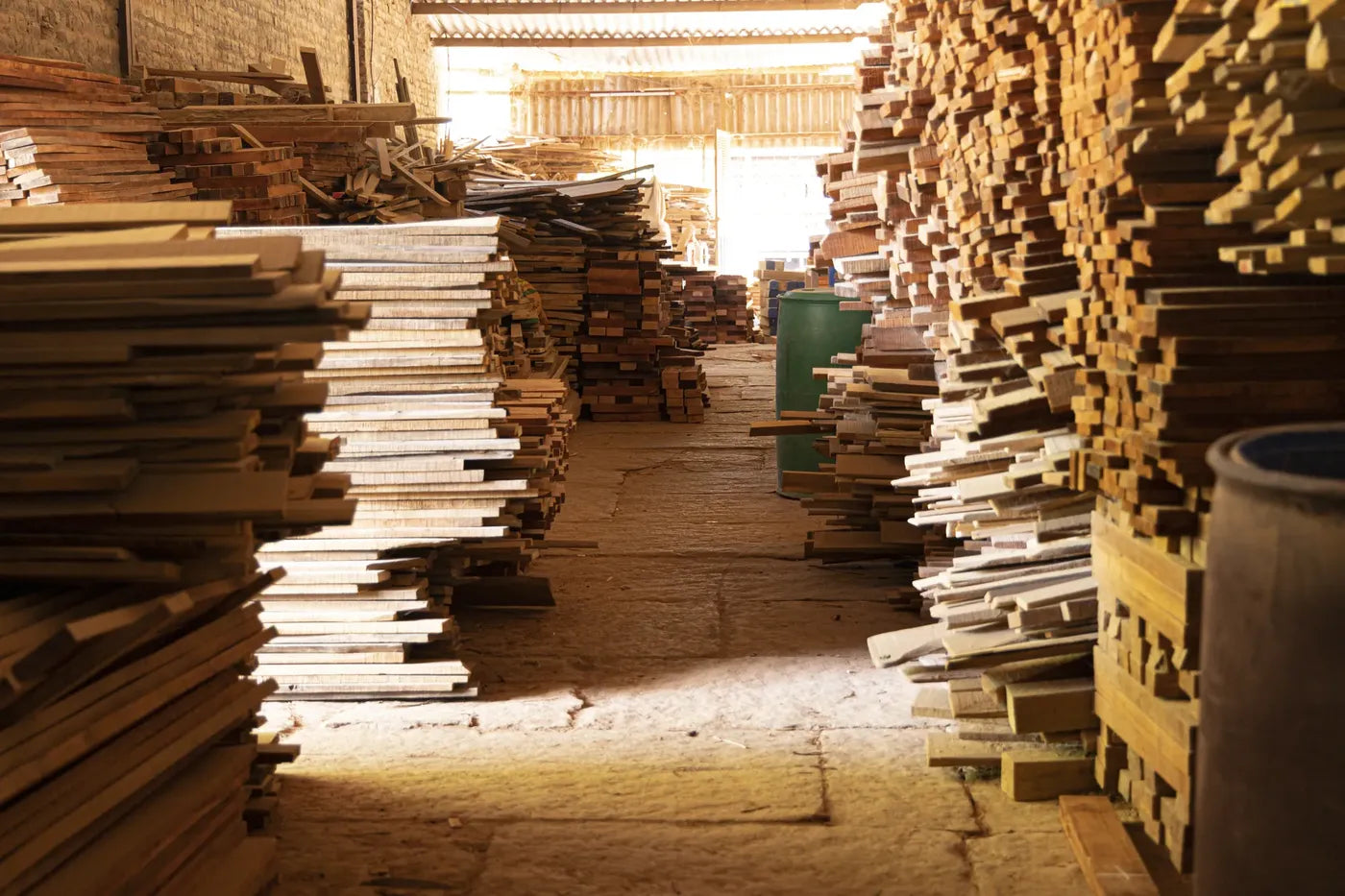
Treatment: protection from the inside.
Teak heartwood resists insects naturally. Sapwood, and any non-teak parts, do not.
Termites and wood borers are a real risk in South Indian homes. Treating timber before it is made into furniture protects the parts that need it, long before any damage would show.
Ask any seller: “Is the wood treated against termites and borers, and with what?”
Solid, ply and veneer.
Not every part of a bed needs to be solid teak. What matters is that you are told.
Plywood, for example, is a sensible choice for a flat base board under a mattress, because it stays flat. The problem is never the material itself; it is not knowing which material is where, and paying a solid-teak price for parts that aren’t.
Ask any seller: “Can you list the material of every part: headboard, footboard, rails, legs, base, storage box?”
The polish you breathe.
You sleep in a closed room for eight hours a night. The finish on your bed shares that air with you.
Many common furniture polishes are solvent-based. They give off fumes while curing, and their smell can hang in a closed bedroom after delivery. Children and elders are the most sensitive to it.
Solvent-based polish
- Strong smell after delivery
- Solvent fumes in a closed room
- Hardest on children and elders
Water-based polish
- Low odour from day one
- Less solvent smell in the bedroom
- Gentler for the whole family
Ask any seller: “What polish is on it: solvent-based or water-based? Can I see the product?”
Joints, tests and certification.
A bed is a structure. It carries weight every night, and it gets pushed, sat on and moved.
Joints
How the side rails meet the headboard and footboard decides whether a bed stays silent and steady for decades or starts to creak and wobble. Ask how they are joined, and whether the bed can be taken apart and refitted if you move house.
Load testing
A tested design has been loaded with weight, beyond normal use, to check it holds. Ask whether the model was tested, and what the result was.
Certification
The ISI mark shows a product is made under a licence from the Bureau of Indian Standards (BIS), certifying it against an Indian Standard. A genuine mark always comes with a licence number, and you can check that number using the official BIS Care app.
Ask any seller: “Is it load-tested? Is the maker BIS certified, and what’s the licence number?”
Living with teak.
- No two pieces are alike. Grain, knots and colour vary. A bed won’t match its photos exactly, and that’s the wood, not a defect.
- It deepens with time. Teak’s colour warms and darkens with light and age.
- Care is simple. Dust with a dry soft cloth; keep it out of direct sun and away from standing water.
- Things can still get damaged. Ask what happens if a part breaks after the warranty ends.
Every bed has a 5-year warranty, and replacement parts are available at cost until 10 years from your purchase date, even after the warranty ends.
The checklist.
Take these questions to any shop or website. Here are our answers next to them.
- Ask any sellerKalingaa’s answer
- What if a part breaks after the warranty?Replacement parts at cost, until 10 years from purchase.